



Volume #18 | IssueNo. 327/2026 | August 2026
Freedom is a responsibility
Whether it is the inspiring words of the “Nightingale of India”, freedom fighter Sarojini Naidu or the brave words of our martyr Shaheed Bhagat Singh (refer the header and footer for their quotes) or the simple act of gently waving the tricolour by this beautiful, little girl in the video – the patriotic fervour and pride remains the same across the decades, as we celebrate our 80th year of Independence
For me, 15th August, 2026 was filled with the Voices of Freedom (a curated set of stirring nationalistic quotes put together by my good friend Deepak Gupta, which I have happily borrowed for this issue) to which our orators gave their authentic voices and bold takes and consuming plenty of ‘Did you know’ trivia from researched sources and the ubiquitous Whatsapp university 😊 However, my best pick would be this video below with a thoughtful IDay message blending Freedom with Sustainability and Responsibility.
🇮🇳 A Flag Woven by Nature 🌿
This Independence Day, we celebrate freedom with a flag crafted from nature’s own gifts—jackfruit leaves, Parijaat flowers, and neem stems. 🌱🌼
A reminder that our truest freedom is also a responsibility: to love, protect, and live in harmony with the nature that gives us life.
Let our Tiranga inspire not only patriotism, but a promise to keep India green, beautiful, and free. 🇮🇳 💚
Happy Independence Day! ✨
The video says it all….freedom, natural elements, sustainable living, responsibility towards Mother Earth, harmony and happiness ! The little girl (my good friend Satya’s granddaughter) has made the flag all by herself and actually lives on a 8 acre land developed as a permaculture forest by her parents. Home schooled, friends with plants, trees, animals, birds, fish, insects and children of the villagers and tribals alike, she is enjoying true freedom – breathing fresh air, eating organic food and learning without boundaries and biases.
Years ago, her techie parents moved away from the city life of concrete jungle to a real life of natural forests, adopting Permaculture to transform barren parcels of land into lush, green living expanses.

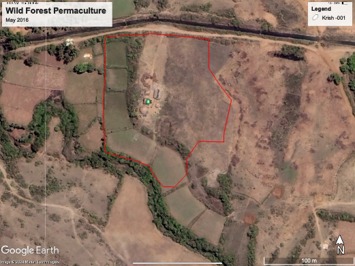 (Permaculture is a design system that mimics natural ecosystems to create sustainable, self-sustaining human habitats, farms, and agricultural spaces). Creating ponds, preserving microbes through mulching, growing everything naturally, hosting desi and international students and volunteers to give them a sustainable living experience, rain water harvesting, food forest development, consultation for other similar farms – Srikrish and his engineer wife, Rajanya have been at the forefront of all of this through their venture “Wild Forest Permaculture Farm” which is at the foothills of the famous Araku Valley, near Vizianagaram in Andhra Pradesh, India. Recognised widely for his pioneering sustainable living efforts, he says “I dream of making my farm, a mini tropical rainforest”.

A mindful, bold way of living by a young couple that calls for patience, perseverance, passion and purpose. Rare to find. Hard to emulate. A role model for all. A powerful reminder that the E in Environment is to be experienced and embraced, living amidst nature and not by merely doing courses in Sustainability or attending ESG summits in air-conditioned auditoriums !
As you stay inspired by the freedom quotes and lived experiences, scroll down for the regulatory udpates for August, 2026 that is carried in this 327th issue of Samhita.
For access to previous issues of Samhita and readers’ feedback, please visit:
👉 http://www.sharadasc.com/resource-center/
Happy Reading
S.C. Sharada
 www.linkedin.com
Regulatory Updates
MCA Update
The Ministry of Corporate Affairs (MCA), vide General Circular No. 04/2026 dated 31 August 2026, has extended the validity of the Companies Compliance Facilitation Scheme, 2026 (CCFS-2026) up to 15 September, 2026. The Scheme was originally scheduled to remain in force until 15 July, 2026. Subsequently, the last date of the scheme was extended up to 31 August, 2026 vide General Circular No. 03/2026 dated 8 July, 2026.
The extended timeline provides companies with additional time to complete their pending statutory filings under the Scheme and supports ease of compliance.
DGFT Updates
DGFT, through Notification No. 27/2026-27 dated 5 August 2026, has introduced the Inventory-based Cross-border E-Commerce Facilitation Framework under the Foreign Trade Policy (FTP) 2023. The framework provides a structured mechanism for inventory-based e-commerce exports of Indian-origin goods and introduces the concepts of Exporter-on-Record (EOR) and Seller-on-Record (SOR). Eligible EORs are required to maintain segregated and traceable export inventory, supported by a digital repository, and may procure goods from SORs only against confirmed export orders.
The framework also prescribes operational safeguards, including payment to SORs irrespective of the receipt of payment from overseas buyers, distribution of eligible export rebates/refunds in proportion to the FOB value, and EOR responsibility for reverse logistics and returned consignments. Returned or rejected export goods cannot be sold in the domestic market. The initiative is expected to strengthen India’s cross-border e-commerce ecosystem by providing a formal export mechanism for e-commerce platforms while improving traceability, compliance and access to international markets for Indian manufacturers, MSMEs and sellers.
(Open Inventory-based Cross-border E-Commerce Export Framework notification dated 5 August, 2026)
DGFT, through Trade Notice No. 16/2026-27 dated 6 August 2026, has expanded the “Source from India” facility on the Trade Connect ePlatform to include DPIIT-recognised start-ups. The “Source from India” platform serves as a digital interface for international buyers to discover Indian exporters, with exporters able to create microsites showcasing their products and credentials. Eligible DPIIT-recognised start-ups can now register on the platform and, upon verification of their export activity through the DGFT IEC database, will receive a unique start-up badge linked to their profiles.
A special exception has also been provided for DPIIT-recognised start-ups holding an active IEC and not appearing on the Denied Entity List (DEL) list, allowing them to register even if they do not meet the general eligibility criteria. Existing Trade Connect users linked to eligible IECs will automatically see the option to create a “Source from India” microsite. The initiative is intended to enhance the global visibility of Indian start-ups, support export growth, diversify India’s export basket and strengthen India’s position as a hub for innovation-led exports.
DGFT, through Notification No. 30/2026-27 dated 20 August 2026, has amended Paragraphs 2.52 and 2.53 of the Foreign Trade Policy (FTP) 2023 to align the treatment of export contracts and export realisations in Indian Rupees with the prevailing foreign exchange regulations. Under the revised provisions, export contracts and invoices involving countries other than Asian Clearing Union (ACU) member countries may be denominated in foreign currency or Indian Rupees, with export proceeds permitted to be realised in either. For ACU member countries (other than Nepal and Bhutan), contracts are to be denominated in the currency determined by the ACU, while exports involving Nepal and Bhutan are to be denominated and settled in Indian Rupees or as directed by the RBI.
The notification also revises the eligibility of exports realised in Indian Rupees for FTP benefits and fulfilment of export obligations. Exports to countries other than Nepal and Bhutan, where proceeds are realised in Indian Rupees through permitted banking channels and credited to the INR accounts of persons resident outside India in accordance with the Foreign Exchange Management (Deposit) Regulations, will be eligible for FTP benefits and fulfilment of export obligations at par with exports realised in freely convertible currency. The amendment is effective immediately and is intended to align the FTP provisions with the Foreign Exchange Management (Manner of Receipt and Payment) Regulations, 2023.
SEBI Updates
On 7 August 2026, NSE issued a circular to all listed entities reiterating best practices for handling Unpublished Price Sensitive Information (UPSI) under the SEBI (Prohibition of Insider Trading) Regulations, 2015, requiring listed companies to: maintain structured digital databases recording the nature of UPSI and the identities (with PAN) of persons sharing and receiving such information; periodically review internal policies to prevent UPSI leakage; conduct periodic training programs; and ensure effective operationalization of their Codes of Conduct.
NSE and BSE have issued clarifications on 14 August 2026 and 28 August 2026, respectively, on the filing of corporate actions under Regulation 42 of the SEBI (LODR) Regulations, 2015. Listed entities are required to use only the “Record Date” mechanism for corporate actions and file such intimations through the prescribed NEAPS Corporate Action module. The FAQs also reiterate minimum notice periods, including a three-working-day gap between approval and the record date for most corporate actions and seven working days for schemes such as mergers, demergers and capital reductions. Further, AGM/EGM-related dates are not treated as corporate action record dates for this purpose.
The clarification aims at standardizing corporate action filings, reduce procedural errors and improve the timeliness and accuracy of disclosures to investors.
SEBI issued a circular on 20 August 2026 permitting digitally signed Powers of Attorney from FPIs, executed in accordance with the Information Technology Act, 2000, thereby eliminating the requirement for notarisation, apostillisation, or consularisation of such documents. This measure is aimed at reducing the time taken for FPI onboarding and improving ease of doing business for foreign investors.
Vide Circular dated 20 August 2026, SEBI notified KYC Registration Agencies (KRAs) of the formal specification of the International Financial Services Centres Authority (IFSCA) under Regulation 16A(1) of the SEBI (KRA) Regulations, 2011, enabling IFSCA-regulated entities to access the KRA system for KYC purposes in respect of their clients engaging them for financial services. IFSCA-regulated entities accessing KRA data are bound by all provisions of the SEBI KRA Regulations and the Master Circular on KYC norms dated 12 October 2023.
IFSCA Updates
IFSCA has directed all regulated entities in IFSCs to maintain valid and subsisting Letters of Approval (LoA) and applicable regulatory approvals at all times. The Authority cautioned that operating without the requisite approvals may lead to regulatory action, including penalties, suspension, or cancellation of permissions.
IFSCA has extended the timeline for IFSC entities to migrate to ISINs issued by an IFSCA-recognised depository from 31 August 2026 to 31 December 2026, providing additional time for compliance. The related deadline for submission of the depository’s transition compliance report has also been extended to 31 January 2027.
ESG Updates
Every CDP cycle brings adjustments, but the scale of what is changing for 2026 sets this year apart. This year’s updates raise the bar for disclosure, emphasizing detailed, evidence-based reporting over broad commitments. Companies that make only minor changes to last year’s responses may see scores stagnate or decline as expectations and assessment standards become more rigorous.
- Ocean-related disclosures introduced: CDP has added questions on ocean-related impacts and dependencies for the first time.
- Expanded Forests module scope: The Forests questionnaire now covers seven high-risk commodities instead of four, adding cocoa, coffee and rubber to cattle, palm oil, soy and timber.
- Greater disclosure specifically required:
- Climate: More detail is needed on how adaptation and resilience are integrated into governance, strategy and financial planning.
- Water Security: Increased alignment with GRI 303, including more detailed disclosures on discharge and pollution management.
- Plastics: Although still unscored, the questionnaire now places greater emphasis on packaging formats and reuse models.
- Changes to scoring methodology: Several essential criteria have been revised. Since missing an essential criterion can cap the maximum achievable score regardless of overall response quality, reviewing the updated methodology at the question level is critical for maximizing performance.
The Science Based Targets initiative (SBTi) will update its Target Dashboard on 24 September 2026, introducing revised company and target status classifications and updated regional classifications aligned with the UN M49 standard. The existing “Committed” status will be replaced with “Commitment to Set Targets”, while “Targets Set” will become “Validated Targets.” The revised framework will also introduce statuses such as “Commitment Extended” and “Commitment Removed”, providing greater clarity on the progress and status of companies’ climate commitments.
At the target level, SBTi will introduce classifications including Validated, Inactive, Legacy, Expired and Other. These classifications will help distinguish targets affected by withdrawals, mergers or acquisitions, cessation of operations, expired target periods, or unsuccessful validation. The revised framework will replace the existing Commitment Compliance Policy and apply to entities within the SBTi system from 24 September. Companies currently classified as “Targets Set” can request withdrawal before 31 August 2026; thereafter, the revised status framework will apply.
India has launched its first-ever Guide to Grasslands and Other Open Natural Ecosystems (ONEs) at the UNCCD COP17 in Ulaanbaatar, Mongolia, recognising the ecological, economic and social importance of grasslands, savannas, deserts, scrublands, ravines and other open landscapes. The guide maps India’s diverse ONEs and highlights their role in supporting biodiversity, soil and water processes, carbon storage and pastoral, livestock-based and agricultural livelihoods.
The initiative aims to promote science-based conservation, restoration and sustainable management of these ecosystems, which have historically been overlooked due to their limited tree cover. It also emphasises pastoralism, fire ecology, carbon sequestration, climate resilience and community participation, supporting India’s Land Degradation Neutrality (LDN) goals. The guide is expected to serve as a resource for policymakers, researchers, conservation practitioners and local communities while strengthening the representation of grasslands and other open ecosystems in global discussions on biodiversity, land restoration and climate resilience.
Tax Updates
The Income-tax Amendment Bill, 2026, introduced in the Lok Sabha on 4 August 2026, was passed by the Lok Sabha on 6 August 2026 and by the Rajya Sabha on 10 August 2026. The Bill repeals and replaces the Income-tax (Amendment) Ordinance, 2026 and introduces amendments to the Income-tax Act, 2025, the Finance Act, 2026 and the Payment and Settlement Systems Act, 2007.
Key amendments include:
- Foreign Investors: Exemption from income tax on interest and capital gains arising from Government Securities for registered Foreign Institutional Investors (FIIs) and the Bank for International Settlements, with effect from 1 April 2026.
- Diamonds and Electronics: Tax relief for foreign companies in respect of rough diamond sales in notified zones and storage of electronic components in bonded warehouses, with the provisions extending up to 31 March 2041.
- Investment Funds: Removal of restrictions applicable to foreign-registered funds managed from India, including conditions relating to minimum number of members, corpus and investment limits.
- Business Trusts: Increase in the surcharge applicable to Special Purpose Vehicles (SPVs) from 10% to 25%, along with exemption for unit holders from certain dividend-related taxes.
- Data Centres: Extension of the exemption relating to services procured from Indian data centres to leased operations.
The amendments provide statutory backing to the measures earlier introduced through the Income-tax (Amendment) Ordinance, 2026.
The Foreign Assets of Small Taxpayers Disclosure Scheme, 2026 (FAST-DS) provides a mechanism for voluntary disclosure of undisclosed foreign assets and income, along with specified immunity from penalty and prosecution. The Scheme was introduced through Sections 114 to 128 of the Finance Bill, 2026.
The Scheme follows a two-tier structure:
- Category 1 – Undisclosed Foreign Assets/Income up to ₹1 crore: Tax is payable at 30% of the fair market value of the undisclosed asset and 30% on undisclosed foreign income, along with a penalty equivalent to 100% of the tax. Upon compliance, the taxpayer is granted immunity from further tax, penalty and prosecution under the Black Money Act.
- Category 2 – Reporting Defaults up to ₹5 crore: A flat fee of ₹1,00,000 is payable to regularise the reporting default, without additional tax or penalty. This category is principally aimed at returning Non-Resident Indians (NRIs).
The Scheme is available to residents and to non-residents or Not Ordinarily Residents (NORs) who were resident in the relevant year. However, assets or income constituting proceeds of crime under the Prevention of Money Laundering Act, 2002 (PMLA) and matters where assessment under the Black Money Act has already been completed are excluded.
The disclosure process is proposed to be carried out electronically, with a two-month payment window following the issuance of the relevant order.
(Open Foreign Assets of Small Taxpayers Disclosure Scheme, 2026 dated 14 August 2026)
GST Update
The Central Board of Indirect Taxes and Customs (CBIC) is examining a proposal to centralise GST audit and investigation for businesses operating across multiple States under a single Permanent Account Number (PAN). The proposal seeks to enable such taxpayers to undergo a consolidated review instead of facing separate and parallel proceedings by authorities in different States.
Key features of the proposal include:
Unified proceedings: Taxpayers would make a single set of submissions and undergo a common examination of facts.
Consistency: The framework is intended to promote greater consistency in the interpretation and application of GST provisions across States.
Reduced compliance burden: The proposal seeks to minimise duplicate enquiries and reduce compliance costs for multi-State businesses.
State-wise compliance unchanged: State-wise GST registrations and return filing requirements would continue to remain in place.
Proposed timeline: Implementation has been indicated within approximately six months of the Working Group submitting its report.
Status: The proposal is presently under examination. No notification or circular has been issued, and no statutory change has come into force as of now.
Quote of the day
Disclaimer: The contents of this Newsletter are only a summary and has not dealt with any issue in detail. Any action taken or proposed to be taken must be in consultation with professionals and not merely based on the articles / news updates. S. C. Sharada & Associates disclaims all liability on action taken without professional advice.